It is a common theory that all myths, legends and fairy tales across different cultures are the same stories just interpreted differently by a collective subconscious. Joseph Campbell's book titled The Hero With A Thousand Faces, studies the idea of how people continuously reinvent the same characters and stories in new contexts. Campbell's work is based on Carl Jung's research on archetypes. In particular Campbell looked at Jung's study of the psychological aspect of archetypes, in how people categorize personalities and character traits to give a generalized and quick description of other people or characters. The link made here was how in these different cultures, across different continents, people envision the same archetypes in their stories. Campbell focused mainly on how the hero archetype is reinvented the most with little innovation to evolve the character. Just looking at different mythologies you can very obvious parallels. The stories of the Theseus and the Minotaur and David and Goliath really are the same stories just with the specific characters and locations changed. Both tell the story of a reluctant/unlikely hero attempting to bring down an oppressive/terrifying monster and overcoming them with intelligence and skill. This hearkens back to Campbell's focus on the hero's journey, a specific list of events and the order they occur in which he called the 12 stages of the hero's story.

- Building the world. Before meeting the protagonist, the world he/she exists must be built up first, be the real world, or a fictional one with specific rules and nuances. It also has to show case the protagonists ordinary life so we can reflect later on how the hero's life has changed.
- The call to adventure. Here the protagonist is given a motive or ultimatum on which they are challenge to leave or change everything they know and are used in order to do good.
- Refusal of the call. Here the protagonist reflects on their commitments and how they cannot just abandon their loved ones and way of life and go to adventure.
- Motivation. At this point the protagonist is affected or hurt by something or someone they care about being in pain or murdered/destroyed and give the hero a sense of necessary justice to be had.
- The mentor. It is here where the protagonist does not know where to go or how to proceed, so seeks the wisdom of a mentor to guide or train them in the right direction.
- Crossing the threshold. Now the hero is ready to leave behind the life they once knew in order to begin on their quest for justice.
- Trials/Allies/Enemies. The protagonist must face hurdles and hardship through physical abuse and mental, knowing who to and who to not trust. Being forced to forge new alliances and overcome enemies for the first time.
- Entering hostile territory. Here the hero is truly out of their depth. Be it real or psychological conflict they approach, our protagonist is reminded of what they left behind and fear what is to come.
- The supreme ordeal. Here the protagonist faces their greatest obstacle. They will be challenged physically and mentally to brink, but will overcome this ordeal with strength, skill and intelligence.
- The reward/goal. Now our hero retrieves their prize/accomplishes their goal. Here the protagonist has changed not by what they have now acquired but upon what they have done to complete their task, and is wiser and stronger because of it.
- Return/Escape. The protagonist must journey back to their homeland, echoing the voyage from it. This still may be no easy task as enemies may still be present or the hero may need to escape a hazardous environment.
- Reconciliation. Once all returned, our protagonist reflects on all they have accomplished and what they have had to overcome in order to achieve what they have now, focusing on either celebration or relief that the ordeal is over.
Now this template is of course without nuance and often writers utilizing this formula will shift certain events around to surprise audiences. But look to most games and films and you can easily recognize this progression of character throughout the narrative. This however does not make all characters following this arc the same though. It is the unique details and personal charisma of every different character that sets them apart. That is why this template is so frequent throughout history as many different personalities can be projected onto this narrative arc.
The book by Christopher Booker titled The Seven Basic Plots which studies reoccurring stories and fables across different countries, faiths and peoples, and how across great distances and expanses of time, completely different cultures create stories with similar story structures and characters.
The seven plots are as follows:
- Overcoming The Monster
- Rags to Riches
- The Quest
- Voyage and Return
- Comedy
- Tragedy
- Rebirth
My task was to link these basic story threads to different modern video games.
 For overcoming the monster I chose Portal as it shows the story of Chell fighting the omni-present GLaDOS while performing multiple, grueling, test chambers before facing her face to face to stop the GLaDOS attempting to kill her when Chell is no longer of use to her.
 For rags to riches I thought Grand Theft Auto 5's story of Franklin, in how he arose up from petty theft and gang violence to seek a more successful criminal career in taking part of heists with former professional Micheal Townley. Here it shows once Franklin gets his money and success, he interacts differently to his former colleagues and their views of him change too.
 For the quest I chose The Witcher 3. While the game is made up of multiple in depth quests, the main overarching one is of the protagonist Geralt Of Rivia searching the northern realms to find his adopted daughter Ciri when he learns that she is in danger. In order to do this Geralt has to perform numerous tasks and trials in order to track down what Ciri has been doing and where she went.

 For voyage and return I thought Mad Max the game would be a suitable if somber choice for this story as you start off the game as Max roaming the wasteland in search for solace in the 'plains of silence' but before he can gets his car, the Interceptor, stolen from him and the game begins with the goal of creating a new vehicle cable of crossing the 'plains of silence'. In this journey Max comes close to recovering his humanity as he helps numerous people in the wasteland only for his work to be undone towards the end by the antagonist Scaborus Scrotus. After taking retribution on Scrotus Max looses his new car but retrieves what is left of his original, leaving him in the same broken state he was at the beginning of the game.
 For comedy, I chose Saints Row 4 as it almost prides itself in how self-aware and genre mocking it is. The start of the game, your created character is the president of the United States where you comically make new laws by multiple choice and promptly after the induction there is a huge alien invasion which then enslaves the entire human race by caging them in a comical knock-off of the Matrix where you wake inside a 1950's sitcom. While escaping the sitcom your character gains super powers to fight the aliens and the plot seems to descend into hilarity from there.
 For tragedy I chose Halo:Reach where you follow the story of Noble team as they investigate the beginnings of an alien invasion by the Covenant on a human colony called Reach. Most fans knew how this would end as it is well stated that Reach was the last human planet to fall before the Covenant found Earth. The game encompasses the initial fighting, the small victories against an overwhelming force, the suffering and loss and of course the inevitable defeat. It's the continuing loss of team mates that hits the player hard throughout the campaign.
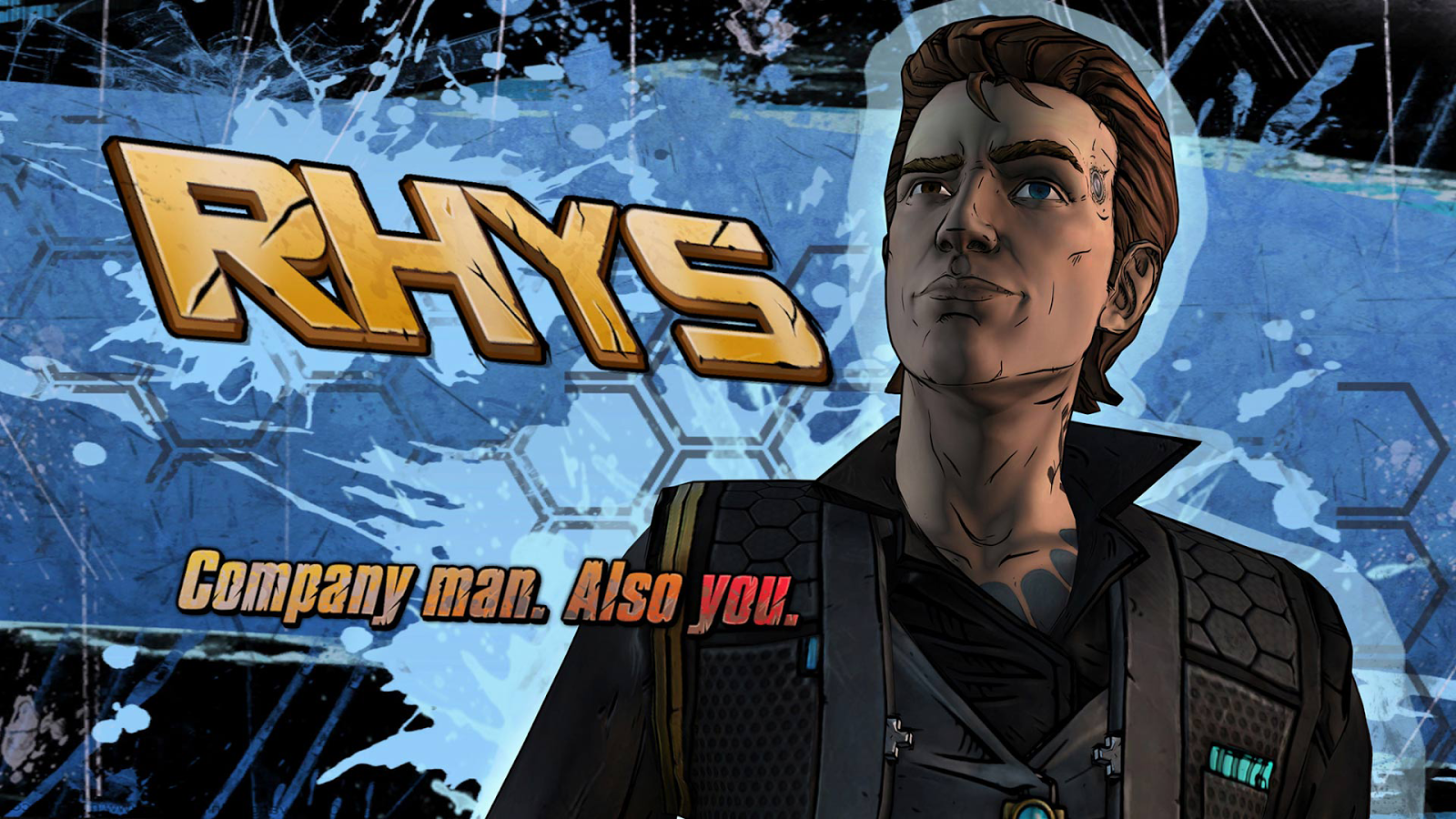 For rebirth I chose Tales From The Borderlands, in particular Rhys' story, changing from an aspiring, backstabbing, manipulative Hyperion employee who viewed Handsome Jack as a hero, to a sympathetic hero, fighting his power hungry urges to save his friends. Of course this depends entirely on the players choices throughout the story as this can go completely the other way around. Still the majority of players witnessed Rhys realize the error of his and Handsome Jack's ways in order to do good.
The 80's
 One of the first real video game characters ever made was that of villain Donkey Kong in the 1981 game Donkey Kong as it was also one of the first inclusions of a plot into a video game. You would play as Jumpman, later on to become Mario, in a quest to rescue Lady from being kidnapped by Donkey Kong. In order to get her back Mario would have to jump his way up a series of levels under the constant threat of being hit by one of the barrels Donkey Kong would endlessly throw at you. Donkey Kong was also the first video game character to emote inside a video game, smirking when you failed and upon his defeat would look surprised and scared. It was these small details that added to the character.
The 90's
 While the original Half Life came out in the late 90's (1998), I still feel that the most notable character to emerge in that time is that of Gordon Freeman. Silent protagonists had been done before, but never with this amount of interaction with other characters. It is hard to believe that one of the industry's most famous characters is one that is completely silent, and this is because of instead of having his own dialogue to build his personality, he is characterized by those who you interact with in the game. This paved the way for multiple games to use a similar system to this as it allows the player to feel as if characters in the game are interacting with them and not just another character.
The 2000's
 The Master Chief from the Halo series is probably the most well known science fiction action hero in the entirety of gaming. Halo came as a launch title for the original Xbox in 2001 and became a staple of the platform ever since. The lasting appeal of the character came from his iconic armour design and his stoic voice and attitude to unfolding events. While not necessarily innovative compared to the previous two characters but builds more on being a character that players want to be, the writers clearly trying to emphasize how 'epic' they wanted the character to be, and they really did succeed.
The 2010's
 Handsome Jack. In my opinion one of the greatest written villains of all time, was the main antagonist in Borderlands 2 and his overwhelming charisma and presence was felt throughout the entire game. Whenever a quiet moment in the game was had, Jack would be there to interject a quip or insult to you to really grind in how despicable his character was. It really was a testament of how great the character was written of how disgusting Jacks actions were, yet he remained so likable and entertaining to listen to and as a result became the most enduring character of the series, having a prequel game flesh out his back story and telltale create a miniseries of games showing how his legacy still effects the world of Pandora.
My first task for the contextual studies portion of my course is to study Roger Caillois' classification of games and how it is relevant to modern day video games. The specified categories being: Agon, Alea, Mimicry, Linux and Paidia and Ludus.
 The category Agon in its simplest definition is a competitive game. For a game to be classed as Agon there must be a clear winner and/or loser at the end of the game, meaning that most Agon classed games have, but are not limited to, two clearly defined sides at opposition with each other, be it one on one or two even teams. All players of Agon games must operate under a clear set of rules that opposing can use to out wit or overwhelm their opposition. These rules apply to all players to give everyone an equal opportunity of success, allowing the players to use their skill, memory and ingenuity to win. However it is common that it is possible that one side may have an environmental, positional or tactical advantage from the beginning of the match, in tennis wind direction, football the level of the pitch and chess one player taking the first move. Depending on on the type of game, and in its length, the overall score is determined by an even number of matches where at the end of each match the sides swap positions so both teams have experience playing in different conditions or locations.
In terms of video games, the one in particular that stands out as being classified as Agon would be Counter-Strike:Global Offensive. This is because it is the most streamlined and basic form of what a competitive shooter is, that commands the players to use their skills, tactical assessment of the scenario and knowledge of the map layouts and game mechanics in order to win. No one in this game has any advantage over anybody in the game as everyone is given the same tool set and knowledge of its set rules. The victors in this game are determined by who can be most accurate with their shots, who can memorize the map layout and use it to their advantage, know when and how to use certain items and preconceive the actions of other players. The game pits two teams of five against each other with one team team attempting to plant an explosive at the opposing teams side of the map while the other team attempts to stop them or diffusive the explosive if it is planted. There are three ways to determine a win; as the Terrorist team, successfully planting and detonating the bomb or as the Counter-Terrorists, by diffusing the bomb once it is planted, or by either team eliminating all other players of the opposing team. What really makes the game so competitive though is its community, the majority of which command a ridiculously high skill threshold to what is an already demanding set of game mechanics compared to other competitive shooters. This adds into Caillois' other form of classification Paidia and Ludus. Caillois used these to express the sincerity of all game categories, be they jovial(Paidia) or serious(Ludus). In the case of Counter-Strike:Global Offensive it is clearly classified as Agon and Ludus.
The category Agon in its simplest definition is a competitive game. For a game to be classed as Agon there must be a clear winner and/or loser at the end of the game, meaning that most Agon classed games have, but are not limited to, two clearly defined sides at opposition with each other, be it one on one or two even teams. All players of Agon games must operate under a clear set of rules that opposing can use to out wit or overwhelm their opposition. These rules apply to all players to give everyone an equal opportunity of success, allowing the players to use their skill, memory and ingenuity to win. However it is common that it is possible that one side may have an environmental, positional or tactical advantage from the beginning of the match, in tennis wind direction, football the level of the pitch and chess one player taking the first move. Depending on on the type of game, and in its length, the overall score is determined by an even number of matches where at the end of each match the sides swap positions so both teams have experience playing in different conditions or locations.
In terms of video games, the one in particular that stands out as being classified as Agon would be Counter-Strike:Global Offensive. This is because it is the most streamlined and basic form of what a competitive shooter is, that commands the players to use their skills, tactical assessment of the scenario and knowledge of the map layouts and game mechanics in order to win. No one in this game has any advantage over anybody in the game as everyone is given the same tool set and knowledge of its set rules. The victors in this game are determined by who can be most accurate with their shots, who can memorize the map layout and use it to their advantage, know when and how to use certain items and preconceive the actions of other players. The game pits two teams of five against each other with one team team attempting to plant an explosive at the opposing teams side of the map while the other team attempts to stop them or diffusive the explosive if it is planted. There are three ways to determine a win; as the Terrorist team, successfully planting and detonating the bomb or as the Counter-Terrorists, by diffusing the bomb once it is planted, or by either team eliminating all other players of the opposing team. What really makes the game so competitive though is its community, the majority of which command a ridiculously high skill threshold to what is an already demanding set of game mechanics compared to other competitive shooters. This adds into Caillois' other form of classification Paidia and Ludus. Caillois used these to express the sincerity of all game categories, be they jovial(Paidia) or serious(Ludus). In the case of Counter-Strike:Global Offensive it is clearly classified as Agon and Ludus.

The next category Alea defines games based completely around chance and luck where there is a very limited amount of things a player can do in order to determine a win or to achieve a goal. All outcomes in an Alea game are dependent on random variables that can go for or against a player resulting in them being very successful or completely ruined. In an Alea game the player is just an observer of their own fate, unable effect the outcome and is only able to hope on their luck or the misfortune of other players in order to win. Often in Alea games, money is bet on turns/matches in order to more clearly outline a victor or loser. Gambling over card games like poker and blackjack are very common examples of serious Alea gaming (so Ludus-Alea), mostly because of the real-world risks involved and the potential profit/loss that could be had. Here players can use their powers of observation to determine if their opponents have a good/bad hand which they can use to appropriately bet further or fold. They can also manipulate their expressions in order to influence other players into betting further on a hand they could never win. So while the basis of the game is just dealing out a set of cards with the possibility of a certain order of them to align in order to win, the real game is a psychological match of show and tell between all participants. This is actually very common in the use of Alea games, using a game of chance as the basis while another game takes place that depends on the outcomes. An example of this in video games is that of Hearthstone which is a digital card game where you can assemble a deck of assorted cards with varying attack and health values and occasionally have specific unique abilities. Each player takes it turns to play a card the first player starting off with four cards from their deck in their hand and a certain amount of mana points which increase after each turn. Depending on the strength of each card it will have a certain amount of mana points that reflects its stats. One card is drawn randomly from your deck after each turn so knowing exactly what you will get is impossible. From then on you have to use the randomly selected cards at your disposal to attack or counteract your opponent and while this element of the game is closer to being Agon, it still all depends on the luck and chance for the cards you can actually use.
This is also not the only use of chance in modern video games as random number generators are common place in MMO's, RPG's and even level design in rogue-lite games, to keep the player interested with new and different objects and experiences.
 Caillois' definition of Mimicry in terms of play is a game that the player does to impress and captivate an audience by changing their personality into a new character, as if to make a make believe world where the player would operate under the rules of their fantasy. Coming from how children will make up stories on the spot sometimes when they play with each other, acting out different roles and actions, like putting on a play. In video games you cannot really make up stories on the spot as they are usually already made for you, with the exception of open-ended narrative games like Minecraft for instance. However many story driven video games of recent years often give us a set of options for dialogue between characters to allow the player to choose options that they think will build a unique character and often these dialogue choices will determine how the story plays out overall which adds to the feeling of the players importance to a games narrative. Games like the Elder Scrolls and Fallout series have been doing this for years as saying the wrong thing to a npc may make them dislike the player or even start a fight and siding with one faction early on may have impact on how other factions interact with the player later on in the game. It's these kind of interactions in games that make the player feel their actions are impactfull, especially in a game world that players often find themselves spending a great deal of time and makes the experience all the richer for it.
 Linux, Caillois' final category of games, is the pursuit of vertigo and false perception. This can be seen in children spinning round on the spot to achieve a dizzy state where their vision and balance altered, not to hinder themselves, but to experience something different from the norm. The idea or aim is to put the mind into a state where it does not appear to abide by its usual rules, as if to enter a lucid dream and play with gravity, to experience a rush or a falling sensation. It is all in an attempt to distort reality enough to create something familiar yet unknown. Horror games in particular attempt to disorient and disturb players by setting them in identifiable scenarios, then scare them by making them face something that is out of place or impossible to to exist. Dead Space 3 offered a unique way of approaching the horror genre by introducing co-operative play to the series. Both the playable characters in the game suffer from visions that distort the area around them into something more unusual or terrifying, but the unique aspect here is that both players do not experience the same visions at the same time, they happen independent of each other. This attempts to make the players paranoid that what they are seeing is real or not as it plays on how real paranoia works, where one person see's something untoward but another see's nothing.
